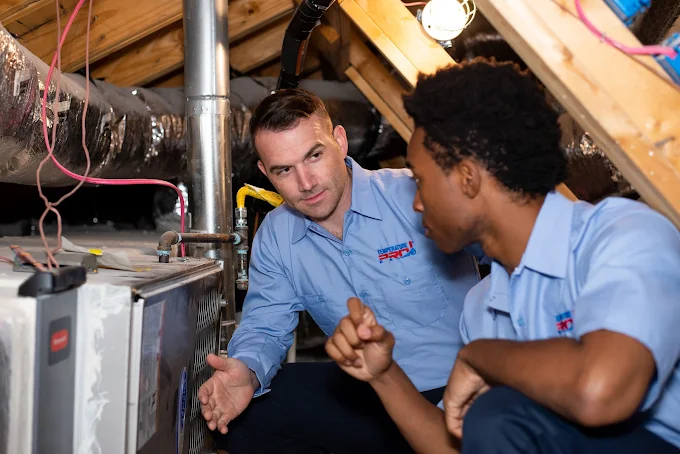
By the TemperaturePro team — serving Dallas, TX and nearby areas like Richardson, TX.
Last week, a homeowner in north Dallas called because the air coming from their vents felt “weak” in the living room—especially compared to the hallway. The system would run, but the temperature never fully leveled out. By the afternoon, their thermostat showed the heat (or cooling) demand was satisfied, yet the rooms still felt stale.
If your vents feel weak or stale, it usually isn’t just a comfort annoyance—it can be a sign your HVAC system is struggling to move air, creating poor circulation, or operating inefficiently. In this guide, TemperaturePro will walk you through what to check first, common causes behind HVAC airflow problems, and when it’s time to schedule HVAC repair in Dallas or nearby Richardson.
Quick Answer
Weak or stale air from your vents typically points to an airflow restriction or system issue—commonly a clogged filter, closed/incorrectly set dampers, dirty blower components, duct leakage or blockage, or a heating/cooling problem that prevents the system from reaching proper performance. The fastest path is to check basic airflow items (filter, vents, thermostat mode), then schedule a professional HVAC inspection if the issue persists—especially if you notice uneven temperatures, unusual noises, or poor heating/cooling response.
What to Check First
Before you call for service, you can narrow it down with a few quick checks. These steps don’t replace a full HVAC inspection, but they often reveal the simplest culprits.
- Check your air filter: If it’s overdue or visibly dirty, replace it. A restricted filter can reduce airflow and make vents feel weak.
- Confirm thermostat settings: Make sure you’re in the right mode (heat vs. cool) and fan is set as you expect (often “Auto” is best for comfort and efficiency).
- Inspect supply vents: Ensure registers aren’t fully closed and airflow isn’t blocked by furniture, curtains, or floor vents covered by rugs.
- Look for obvious airflow imbalance: Are some rooms consistently weak while others are normal? That pattern helps identify ductwork or zoning issues.
- Listen for the blower: If the system runs but airflow feels off, the blower may be dirty, struggling, or not operating as intended.
Local tip: In Dallas-area homes, summertime dust and high humidity can make air feel “stale” even when the system is running. If you’ve had a recent filter change and the problem continues, it’s often tied to return airflow, duct leakage, or an AC system check.
Main Things Customers Should Understand
“Weak” and “stale” air can come from different parts of the system. Here are the most common categories TemperaturePro technicians look for—plus what they usually mean for your comfort.
1) Airflow restriction (the most common root cause)
When vents feel weak, the system may be moving air, but not enough. Filters, blower components, and duct restrictions all affect airflow. If your filter is clogged or the blower needs cleaning, you can get reduced circulation and a noticeable “stuffy” feeling.
2) Duct issues (leaks, blockages, or poor airflow balance)
Even a healthy furnace or AC won’t deliver comfort if the duct system can’t distribute properly. Duct leakage can pull conditioned air into unconditioned spaces, while blockages can reduce airflow to specific rooms.
If you suspect duct-related problems, TemperaturePro can help with options like duct cleaning and additional ductwork evaluation based on what we find during an inspection.
3) Heating or cooling performance problem
Sometimes the vents feel weak because the system isn’t operating at the performance level it should. For example:
- Furnace problems: Your system may run but not heat effectively, which can make air feel underwhelming.
- AC problems: A cooling or refrigerant issue can lead to poor temperature drop and airflow that feels “warm” or “stale.”
If you’re dealing with a furnace-related concern, you may want to explore TemperaturePro’s furnace repair options. For a comfort-first approach, tune-ups and inspections can also prevent airflow and performance issues from starting in the first place.
4) Indoor air quality and “stale” feeling
Weak airflow isn’t the only reason air feels stale. Poor filtration, airflow imbalance, or contaminants building up in the ductwork can reduce perceived freshness. If the issue is more about air quality than temperature, consider indoor air solutions like duct cleaning (when appropriate) and a broader HVAC airflow inspection.
What I’ve seen in Dallas homes: Many “weak vent” complaints turn into a duct/airflow story—especially when only certain rooms are affected. It’s common for older runs, poorly sealed connections, or long duct paths to create uneven distribution, which homeowners notice more during seasonal swings.
Repair vs Replace (a decision framework)
Most vent problems can be addressed without replacing the entire system, but there are cases where repair and replacement both get considered. Use this table to understand what typically drives the decision.
| Situation | What it usually indicates | Common next step |
|---|---|---|
| Airflow improves after filter/maintenance | Restriction or buildup was limiting performance | Professional cleaning/maintenance and airflow check |
| Vents stay weak even after basic checks | Duct leakage/blockage, blower issue, or system performance problem | HVAC inspection; targeted repair |
| Repeated breakdowns or comfort issues return quickly | Underlying component wear or system mismatch | Repair first, then evaluate for upgrade options |
| System is aging and struggling to meet demand | Efficiency and capacity may be insufficient | Discuss HVAC replacement or system upgrade |
Need airflow help for weak or stale vents?
TemperaturePro helps Dallas and Richardson homeowners pinpoint whether the issue is airflow, ducts, or system performance—so you can choose the right next step without guessing.
Call (469) 275-1624Why This Matters in Dallas, TX
Dallas-area weather swings can make vent problems more noticeable. In summer, air conditioning relies on consistent airflow and proper cooling performance to remove humidity and keep rooms feeling fresh. If airflow is weak, you can end up with uneven comfort and that “stale” sensation even when the system appears to be running.
In Richardson and surrounding areas, many homes also deal with aging ductwork and seasonal dust buildup. That combination can turn a minor restriction into a persistent comfort issue—especially in rooms far from the main air handler or return pathway.
That’s why a focused HVAC inspection is often the best way to connect the dots between vent airflow, indoor air quality, and heating/cooling performance.
| Symptom you notice | What it often points to | Best next step |
|---|---|---|
| Living room is weak, bedrooms are okay | Room-specific duct balance issue or register restriction | Airflow + duct evaluation |
| Air feels stale even at correct temperature | Filtration/return airflow or duct contamination | Indoor air quality and airflow inspection |
| Cooling runs but doesn’t feel cold enough | AC system performance issue or airflow restriction | AC inspection and repair as needed |
| Heating runs but rooms stay cool | Furnace performance or airflow restriction | Furnace service and troubleshooting |
Common Mistakes to Avoid
Most homeowners want the problem fixed quickly, but a few common missteps can make airflow problems worse or delay the right repair.
- Changing thermostats repeatedly: If the airflow or system performance is off, thermostat tweaks won’t solve the underlying cause.
- Ignoring filter changes: A dirty filter can reduce airflow and push the system to work harder—often leading to recurring HVAC repair needs.
- Closing too many vents: Some people try to “balance” air by closing registers. That can starve airflow to the wrong areas and create stale pockets.
- Assuming it’s “just dust”: Dust can be a clue, but weak or stale air often ties back to airflow balance, duct leakage, or heating/cooling performance.
Customer Checklist
If you want to be ready when TemperaturePro arrives, use this quick checklist. It helps us move faster through furnace service, AC service, and HVAC inspections.
- Filter status: When was it last changed, and what size/type is it?
- Vent behavior: Are certain rooms weaker than others?
- Mode and fan settings: Confirm heat/cool mode and whether fan is on “Auto” or “On.”
- Any unusual signs: Strange smells, rattling, whistling, or noticeable temperature swings?
- Recent events: Any recent construction/dust, relocation of furniture/vents, or system downtime after power issues?
Quick practical note: If you’re noticing “furnace blowing cold air” or cooling that doesn’t remove humidity, it’s better to schedule service sooner rather than waiting for the problem to “work itself out.”
Choose the right service path with TemperaturePro
If you’re dealing with HVAC repair, HVAC maintenance, or comfort issues around Dallas and Richardson, TemperaturePro can help you match the symptom to the cause—whether that’s furnace service, AC inspections, or duct/airflow evaluation.
Visit TemperatureProFrequently Asked Questions
How do I know if my weak vents are a furnace issue or a duct/airflow issue?
Start by checking whether the problem changes with mode. If vents feel weak during heating but not during cooling (or vice versa), the cause may lean toward furnace or AC performance. If the issue is consistent across seasons, it often points to airflow or duct balance. Also note whether only certain rooms are affected—room-specific weakness commonly suggests ductwork or register airflow restrictions.
Can I fix weak or stale vents myself?
You can handle a few basics: replace a clogged filter, confirm thermostat mode/fan settings, and ensure vents aren’t blocked or fully closed. Beyond that, airflow problems often require inspection of blower operation, ductwork pathways, and heating/cooling performance. If air is still weak after basic checks—or if you notice uneven temperatures or unusual sounds—calling for professional HVAC inspection is the safest, most efficient next step.
What should I ask for during an HVAC inspection for weak airflow?
Ask the technician to evaluate airflow and comfort performance (not just whether the system runs). That typically includes checking the filter and blower operation, inspecting ductwork for obvious restrictions or imbalance, and verifying the heating or cooling system is performing as expected. If indoor air quality is part of the complaint, discuss return airflow and filtration considerations as well.
What are common signs of furnace problems related to airflow?
Homeowners often report issues like the furnace running but not heating evenly, vents feeling underpowered, or air that doesn’t seem to reach the rooms it should. These symptoms can be caused by airflow restrictions, blower-related issues, or furnace performance problems. If you’re seeing patterns like certain rooms never warming up—or the system repeatedly struggles to maintain temperature—it’s a good reason to schedule furnace service.
Is this only a residential issue, or do businesses in Dallas see the same problem?
Businesses experience similar airflow and comfort issues, especially in spaces with multiple zones, older duct runs, or frequent occupancy changes. If your building has comfort complaints, TemperaturePro also supports commercial HVAC service so the root cause can be identified without disrupting operations more than necessary.
Ready to Get Help From TemperaturePro?
If your vents feel weak or stale, you don’t have to guess. The most practical approach is to start with basic checks, then schedule an HVAC inspection when the comfort issue persists—so TemperaturePro can identify whether the issue is filtration, airflow balance, ductwork, or heating/cooling performance.
For Dallas, TX homeowners and Richardson residents, TemperaturePro is ready to help you restore consistent comfort with clear, professional guidance.
Talk to TemperaturePro today
From furnace service to AC inspections and airflow troubleshooting, TemperaturePro helps Dallas and Richardson customers choose the right next step for weak or stale vents.
Call (469) 275-1624About TemperaturePro
TemperaturePro helps Dallas, TX and nearby Richardson customers with HVAC repair, maintenance, and inspection services designed around practical comfort solutions. We focus on diagnosing the real cause of airflow and performance problems—so you can avoid unnecessary guesswork and get the right furnace service, AC service, or HVAC maintenance plan for your home or business.