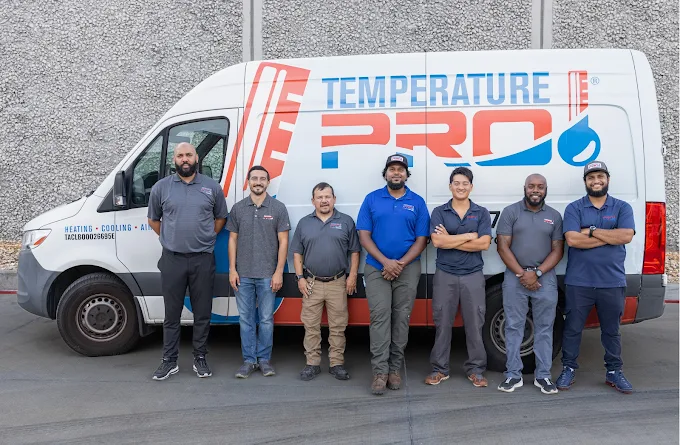
By the TemperaturePro team — serving Dallas, TX and Richardson, TX.
A few weeks before a busy season, a Dallas property manager called because the building “felt warm even though the thermostat was set right.” The filters looked clean, the vents were open, and the system still ran—yet airflow felt weak and uneven across offices. In cases like this, it’s often not one single failure. More commonly, it’s a maintenance gap that lets airflow restriction and system imbalance slowly build up until the comfort problem becomes obvious.
This guide breaks down commercial HVAC maintenance in plain English: what “crisp and clean airflow” actually depends on, what to check first, and when maintenance is the right next step versus repair or system replacement. If you’re managing a Dallas facility (or a business across Richardson), you’ll be able to make smarter decisions before comfort complaints turn into bigger HVAC repair needs.
Quick Answer
Commercial HVAC maintenance keeps airflow strong and the system operating efficiently by addressing the items that cause restriction and imbalance—dirty filters and coils, clogged drains, airflow leaks, worn components, and improper airflow settings. If your system is running but not delivering comfort, routine furnace maintenance, HVAC maintenance, and AC maintenance inspections can prevent comfort problems from escalating into costly failures.
What to Check First
Before you schedule anything, do a quick review. These checks help you describe the issue clearly when you call—so the right parts and service steps are ready when TemperaturePro arrives.
Start here: confirm the problem pattern (one zone vs. whole building), whether airflow is weak only in cooling or also heating, and whether the issue appeared gradually (common with maintenance-related restrictions) or suddenly (often points to a component problem).
- Airflow consistency: Are some rooms noticeably warmer/cooler than others?
- Filter condition: Is the filter visibly loaded or bypassing around the edges?
- Supply/return air: Do return grilles pull strong air, or do they feel “stuffy”?
- Drainage and moisture: Any signs of water at the indoor unit or near condensate lines?
- Thermostat behavior: Does the system satisfy setpoints quickly, or run longer than expected?
If you suspect heating performance issues, you may also want to review related service options like furnace maintenance and furnace inspections to understand what’s typically addressed during a thorough tune-up.
Main Things Customers Should Understand
When customers say “the airflow isn’t crisp,” that usually translates to one of a few root causes: restriction (air can’t move freely), imbalance (air moves but not correctly), or inefficiency (the system runs but can’t keep up). In commercial HVAC systems, those causes are often preventable or manageable through consistent maintenance.
1) Airflow restriction (the slow comfort thief)
Dirty filters, clogged coil surfaces, and blocked drain lines can all reduce airflow and heat transfer. Even if the system “turns on,” it may not move the air volume required for balanced comfort.
2) Coil cleanliness and heat transfer
Coils act like the system’s “exchange surfaces.” When they’re contaminated, the system works harder to achieve the same temperatures. That increased workload can show up as weak cooling, uneven heating, or longer run times—especially during Dallas summer humidity.
3) System calibration and airflow settings
Maintenance isn’t just cleaning. It also includes checking that airflow settings match the design. In commercial applications, airflow changes can happen after filter upgrades, ductwork modifications, or component replacements—sometimes without anyone realizing it.
4) Drain management and moisture control
Condensate problems can create comfort complaints and indoor air quality concerns. A clogged or improperly draining line can lead to moisture where it shouldn’t be, and that can affect performance and cleanliness over time.
5) Electrical and mechanical health
Loose connections, failing blower components, or worn parts can quietly reduce performance. Maintenance catches these issues before they cause a shutdown or a “no heat/no cool” situation.
Pro tip: If your building has multiple units or zones, don’t assume one thermostat setting explains everything. A maintenance check that compares supply/return airflow and system operation across units often reveals the real imbalance behind comfort complaints.
Why This Matters in Dallas, TX
In Dallas and nearby areas like Richardson, HVAC systems deal with wide swings in load—hot, humid stretches followed by cooler periods. Commercial equipment often runs harder during peak demand, and that’s when airflow restriction becomes more noticeable. Buildings with higher occupancy, frequent door openings, or dusty environments tend to accumulate restrictions faster.
One firsthand observation from service work in the Dallas area: many comfort complaints come in after a long stretch of steady runtime—filters look “okay,” but airflow is still reduced because contamination builds across the system (not just at the filter). That’s why a true commercial HVAC maintenance approach focuses on the full airflow path and system operation, not only a surface-level inspection.
| Maintenance factor | What it affects | What you’ll notice when it’s neglected |
|---|---|---|
| Dirty filters & airflow paths | Air volume and distribution | Weak airflow, uneven rooms, longer run times |
| Coil cleanliness | Heat transfer efficiency | Warm air during cooling, poor temperature recovery |
| Drain line condition | Moisture control and system stability | Condensate issues, damp spots, recurring performance problems |
| Airflow calibration | System balance and performance | One zone feels “off” even when others seem okay |
Want airflow that feels “right” again?
TemperaturePro helps Dallas-area businesses plan preventative HVAC maintenance that supports cleaner operation and more consistent comfort. If your system is running but not delivering, the next step is a proper maintenance-focused inspection.
Call (469) 275-1624Common Mistakes to Avoid
Here are the missteps we see most often when customers try to “solve HVAC comfort” without addressing the underlying maintenance needs:
- Changing the thermostat instead of the airflow problem: If airflow is restricted or unbalanced, the thermostat can’t fix it—your system just runs longer.
- Replacing filters without checking fit and bypass: A new filter that doesn’t seal can still allow dust and contamination into the system.
- Only cleaning one part of the system: Many airflow issues involve the full path—returns, ducts, coils, drains, and blower performance.
- Waiting for a total failure: Maintenance is usually cheaper than emergency furnace repair or emergency AC repair outcomes.
Customer Checklist
Use this checklist to prepare for maintenance service and to spot problems early. It also makes it easier for TemperaturePro to target the right furnace service, AC service, or HVAC maintenance steps during the visit.
- Document symptoms: note when airflow feels weak (morning vs. afternoon, certain zones only, heating vs. cooling).
- Check filters: confirm the filter type and whether it’s seated properly.
- Observe air movement: compare supply/return feel across different rooms or units.
- Look for moisture clues: check for water near indoor units, condensate areas, or unusual dampness.
- Plan for seasonal scheduling: line up annual furnace maintenance and annual AC maintenance before peak demand.
If your focus is cooling performance, you may also find it helpful to compare service options like AC maintenance or AC inspections to understand what a thorough check typically includes.
Important reminder: If you ever notice strong “burning” odors, repeated system shutdowns, or signs of electrical issues, stop troubleshooting and contact a professional. Those are not maintenance-only problems.
Realistic Example: What Maintenance Usually Fixes
A mid-sized office in Richardson reported that cooling felt fine at first, then gradually became uneven across conference rooms. The building staff had replaced filters, but the supply air still seemed weaker in specific areas. During a maintenance inspection, TemperaturePro identified airflow restriction across the airflow path and confirmed the system’s operation wasn’t matching the expected airflow balance. After cleaning the relevant components and verifying airflow settings, the building noticed improved temperature stability and more consistent comfort across rooms.
This is a common pattern: comfort complaints don’t always start with a “broken” part. They often start with airflow that’s been slowly degraded—exactly what preventative commercial HVAC maintenance is designed to prevent.
Frequently Asked Questions
How do I know if I need commercial HVAC maintenance instead of repair?
If the system runs but comfort is inconsistent (weak airflow, uneven temperatures, longer run times) and the issue developed gradually, maintenance is often the right starting point. Maintenance inspections can reveal airflow restriction, coil contamination, drainage concerns, and calibration issues that lead to performance problems. If you notice sudden failure symptoms—like the system won’t start, repeated lockouts, or major temperature drops—repair may be necessary. TemperaturePro can help you determine the best next step based on what’s found during inspection.
What’s the difference between HVAC maintenance and a furnace tune-up or AC tune-up?
Think of tune-ups as a focused service for a specific system (heating or cooling). HVAC maintenance is broader and often includes checks across the equipment and airflow components that affect both performance and consistency. For example, during heating-focused service you may see furnace inspections and furnace maintenance steps, while cooling-focused service includes AC inspection and AC tune-up work. Many commercial properties schedule these as part of an annual preventative plan.
Can dirty ductwork affect airflow enough to cause comfort complaints?
Yes. While duct cleaning isn’t always required, airflow can be impacted by dust buildup, blockages, or ductwork issues that restrict air movement. If you’re noticing persistent uneven airflow, it’s worth discussing ductwork repair or related airflow path concerns. TemperaturePro also supports indoor air quality efforts, including services like duct cleaning, when appropriate for the situation.
Should I schedule maintenance for both heating and cooling even if one system seems fine?
In many Dallas commercial properties, yes. Systems often share related airflow components and monitoring routines, and seasonal transitions can expose issues that were “hidden” during the prior season. A planned approach—like annual furnace maintenance and annual AC maintenance—helps reduce the chance of a last-minute failure and supports more consistent performance year-round.
What happens if I ignore airflow problems?
Ignoring airflow issues can lead to higher energy use, more wear on system components, and increased risk of breakdowns. Comfort complaints can also affect productivity and occupant satisfaction. Over time, restriction and imbalance can become severe enough that repairs cost more than maintenance would have. That’s why it’s smart to schedule an inspection when you first notice reduced airflow or uneven comfort.
Ready to Get Help From TemperaturePro?
If your Dallas-area building is running but airflow isn’t delivering the comfort you expect, TemperaturePro can help you identify what’s restricting performance and choose the right next step—maintenance-focused service, repair, or planning for system upgrades when needed.
Schedule a commercial HVAC maintenance inspection
TemperaturePro serves Dallas, TX and Richardson, TX with practical HVAC service guidance designed to keep airflow crisp and operation cleaner. Call to discuss what you’re seeing and what to check first.
Call (469) 275-1624About TemperaturePro
TemperaturePro helps Dallas, TX and surrounding areas with HVAC heating services, cooling services, and commercial HVAC support focused on preventative HVAC maintenance and practical problem-solving. The goal is simple: help customers understand what’s affecting airflow and comfort, avoid unnecessary guesswork, and choose the right service path—whether that’s furnace service, AC service, or broader HVAC maintenance for consistent performance throughout the year.