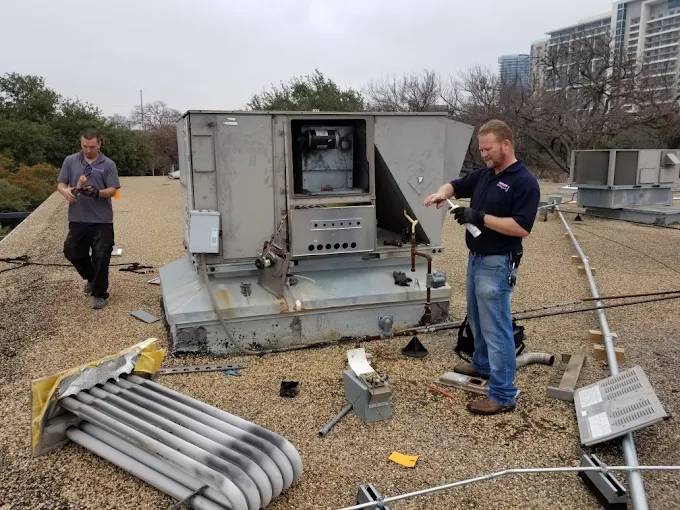
By the TemperaturePro team — serving Dallas, TX and nearby areas.
A Texas summer morning starts out fine—until your thermostat calls for cooling and your air feels weak. You can hear the AC running, but the room never really drops. Sometimes the airflow is strong at first and then fades, or you notice certain vents blowing hard while others barely move air. That “not quite enough air” problem often comes down to blower performance, airflow restrictions, or settings—but the fix depends on what’s actually happening inside the system.
This guide explains how blower-related issues create poor airflow, what you can check safely, when it’s time to schedule AC repair, and how to avoid common mistakes. If you’re in Dallas, TX—or nearby in Richardson, TX—you’ll also see why airflow problems show up fast in our hot, humid stretches.
Quick Answer
If your AC is running but airflow is weak, the most common causes are a problem with the blower motor or its speed control, a dirty air filter, blocked or restricted ductwork, or an improper thermostat/fan setting. A technician will usually confirm blower operation, check airflow measurements, inspect for restrictions, and verify the system is delivering the right airflow for cooling.
What to check first
Before you call, you can narrow down the likely cause without getting into anything unsafe. Focus on items that affect airflow and system behavior.
First safety step: If you smell burning, see visible smoke, or the breaker trips repeatedly, stop and call for AC repair—do not keep restarting the unit.
- Check the air filter condition: If it’s clogged, airflow drops quickly and the blower may seem like it’s “barely pushing.” Replace it with the correct size and rating.
- Verify thermostat fan setting: Set the thermostat to Auto (not On). Incorrect fan settings can cause inconsistent airflow and comfort issues.
- Look at supply vents: Are all vents weak, or just some? Weak airflow at every vent often points to blower/airflow delivery. Uneven airflow can point to duct restrictions, dampers, or return issues.
- Check for obvious blockages: Make sure return vents aren’t blocked by furniture, rugs, or stored items.
- Listen for blower behavior: Does the blower start strong and then slow down? That can indicate a motor, capacitor, or speed-control issue.
Main Things Customers Should Understand
“Strong airflow” isn’t just comfort—it’s how your AC properly removes heat. When blower performance is off, you can end up with warm air, humidity problems, or repeated cycling.
1) Blower motor or speed-control problems
The indoor blower moves air across the evaporator coil. If the motor is failing, the capacitor is weak, or the speed control isn’t delivering the right airflow, the system may still run but won’t move enough air for effective cooling. Customers often describe this as AC blowing warm air or “cold air that never really comes through.”
2) Airflow restrictions (filter, coil, and ducts)
Even when the blower is healthy, restrictions can make airflow drop. Common culprits include:
- Dirty filter (the fastest, most overlooked cause)
- Dust buildup on the evaporator coil and blower components
- Restricted returns that starve the system
- Ductwork issues such as kinks, leaks, or collapsed sections
Expert observation: In many homes, the system “starts” normally, but airflow gradually worsens as dust and restrictions build up—especially after periods when filters weren’t changed on schedule.
3) Thermostat and operating mode confusion
Sometimes the equipment isn’t the problem—your settings are. A thermostat set incorrectly (or a system operating in an unexpected mode) can cause the blower to run at the wrong times or speeds. That can look like a blower problem even when the motor is fine.
4) When blower problems connect to larger AC repair needs
Weak airflow can also interact with other issues. For example, if airflow is low, the coil can behave differently under load. That’s why a real diagnosis matters—especially when the symptom is “airflow,” because the root cause could be mechanical, airflow-related, or control-related.
| What you notice | Most likely cause | What a technician typically checks |
|---|---|---|
| All vents weak; AC runs but rooms stay warm | Blower motor/speed issue or major restriction | Blower operation, speed control, filter/return restriction, airflow measurements |
| Some vents strong, others weak | Duct imbalance, dampers, duct restriction, return airflow issues | Duct airflow verification, obstructions/imbalances, return pathway inspection |
| Starts strong then fades | Motor performance degrading, capacitor/speed control problems | Component testing and operational checks under load |
| Air feels warm or humid despite cooling call | Airflow low across evaporator; system not delivering cooling effectively | Airflow + coil condition + system behavior under cooling cycle |
Need airflow help for your AC system?
If your blower isn’t delivering strong airflow, TemperaturePro can help homeowners in Dallas, TX and Richardson, TX understand the cause and choose the right next step—without guessing.
Call (469) 275-1624Why this matters in Dallas, TX
Dallas summers are hard on HVAC systems. In the heat, your AC depends on moving consistent airflow across the evaporator coil to remove humidity and manage temperature. When airflow is weak, it doesn’t just feel uncomfortable—it can make the system work harder to achieve the same cooling result.
In the Dallas area, many homes have duct runs that develop issues over time (including minor settling, insulation deterioration, or duct leakage). That can make blower-related complaints show up faster during peak cooling months. If you’re noticing weak airflow during high-demand weather, addressing it early can prevent the “it runs but doesn’t cool” cycle from dragging on.
| Decision factor | Why it matters for blower/airflow | What it usually points to |
|---|---|---|
| How long the problem has been happening | Longer issues often mean more dust buildup and additional strain | Repair/cleaning plus a more thorough airflow inspection |
| Whether airflow is weak at all vents | Whole-home weakness more often indicates blower/control or return restriction | Blower motor/speed-control evaluation |
| Whether the issue is worse on high-cool settings | Demand-heavy conditions reveal marginal airflow or failing components | Under-load performance checks |
| Filter change history | Clogged filters directly reduce airflow and can mimic blower failure | Filter replacement and restriction review |
Common Mistakes to Avoid
When homeowners feel weak airflow, it’s easy to “try things” that don’t actually fix the root cause. These are the mistakes we see most often:
- Replacing the filter but ignoring airflow symptoms: A filter helps, but if airflow remains weak after a correct replacement, the issue is usually deeper (return restriction, coil/air path buildup, or blower control).
- Leaving the thermostat fan on “On” constantly: That can cause inconsistent operation and comfort issues that look like equipment failure.
- Continuing to run the system with burning smells or repeated cycling: That can indicate electrical or mechanical trouble. Stopping and calling for AC repair is the safer choice.
- Assuming it’s “just low refrigerant”: Refrigerant leaks do happen, but weak airflow often comes from blower performance or restrictions first. Proper diagnosis prevents unnecessary parts swapping.
Customer Checklist
Use this short checklist before the technician arrives. It helps you describe the problem clearly and speeds up diagnosis.
Blower + airflow checklist (for AC repair)
- Replace/check the air filter (correct size and rating)
- Confirm thermostat is set to Cool and fan is set to Auto
- Note whether airflow is weak at every vent or only certain rooms
- Write down when the issue happens (startup only vs. after 10–20 minutes)
- Check returns for blockages and confirm nothing is obstructing vent grilles
Important: Don’t open electrical panels or attempt blower motor/capacitor work yourself. Blower and control components can be hazardous, and airflow testing is much more reliable when done with the right tools.
Frequently Asked Questions
How do I know if the blower is the real problem?
If the AC turns on but airflow feels weak at most or all vents, the blower system is a prime suspect—especially if the airflow starts okay and then fades. A technician can confirm blower operation and airflow delivery by measuring performance and inspecting the air path. Simple checks like a clean filter and correct thermostat fan setting help, but they don’t replace airflow testing when symptoms persist.
Can I fix blower airflow issues myself?
You can safely handle basic items like replacing a dirty filter, removing blockages from returns/vents, and confirming thermostat settings. Beyond that—motor tests, speed-control checks, and coil/duct airflow verification should be left to trained HVAC professionals. Attempting electrical or mechanical work can create safety risks and delays, especially if the actual problem is airflow restriction or a failing component.
What’s the difference between AC repair and AC maintenance?
AC repair addresses an active problem—like weak airflow, poor cooling, or a blower that isn’t performing correctly. AC maintenance is preventive care that helps keep airflow and system performance stable over time (including cleaning key components and checking operational behavior). If your system is already showing airflow symptoms, start with repair diagnostics, then add maintenance to reduce repeat problems.
Why does my AC feel like it runs but doesn’t cool well?
This symptom often points to insufficient airflow across the evaporator coil, incorrect operating conditions, or airflow restrictions in the duct system. In some cases, refrigerant-related issues can contribute—but airflow is a frequent first cause. That’s why a proper diagnosis matters: it identifies whether the solution is blower-related, airflow-related, or another cooling component.
Is weak airflow connected to duct problems?
Yes. If airflow is uneven (strong in some rooms, weak in others) or you notice certain areas consistently underperform, duct issues or return restrictions may be involved. A technician can inspect the air path and evaluate whether ductwork repair or sealing is part of the solution. For homeowners considering airflow improvements, it can also help to review options such as duct cleaning when appropriate.
Ready to Get Help From TemperaturePro?
If your AC blower isn’t delivering strong airflow, the best next step is getting a real diagnosis—so you don’t waste time on guesses. TemperaturePro helps Dallas, TX homeowners and Richardson, TX customers troubleshoot blower and airflow issues, identify the root cause, and recommend a practical repair path based on what the system is actually doing.
Get your AC airflow back to normal
For AC Repair and airflow-focused diagnostics, TemperaturePro is ready to help customers across Dallas, TX and surrounding areas.
Contact TemperatureProAbout TemperaturePro
TemperaturePro helps homeowners and local businesses with HVAC heating and cooling services designed around practical diagnostics and clear next steps. From AC tune-ups to repair work when airflow drops or cooling performance slips, the goal is the same: help customers understand what’s happening, avoid unnecessary fixes, and keep comfort reliable in Dallas, TX and nearby communities like Richardson.
Helpful related services (one-time or seasonal):
- AC maintenance support for smoother performance through the season
- AC inspections to catch airflow and comfort issues early
- Furnace repair options if you’re troubleshooting comfort across both systems
- AC replacement planning if repairs don’t bring airflow back