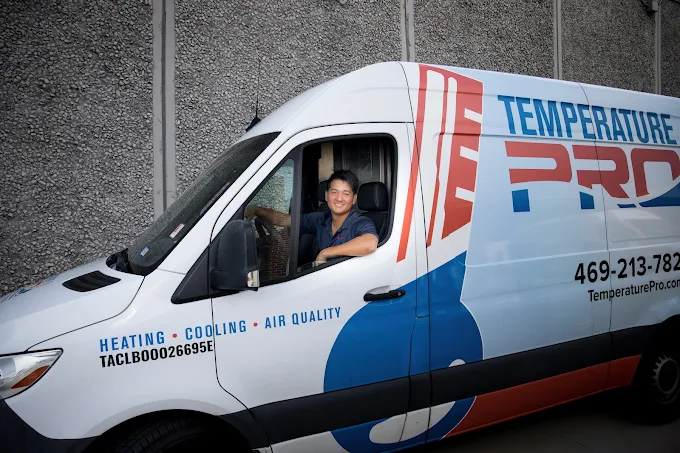
By the TemperaturePro team — serving Dallas, TX and Richardson, TX.
A family in Richardson was fine—until the cold snap hit. The thermostat called for heat, the furnace started, and then… the house never really warmed up. A few days later, the utility bill arrived, and it wasn’t just “a little higher.” It was noticeably higher, with the same rooms staying chilly while the system ran longer than it should.
If your gas furnace (or electric furnace) is struggling to heat evenly or seems to run nonstop, you’re not alone. This guide explains furnace replacement benefits—including what cleaner heat can mean in real life, how replacement can affect utility bills, and how to decide between furnace repair and furnace system replacement with confidence in Dallas, TX.
Quick Answer
Replacing an older furnace can improve comfort and reduce waste when the system is inefficient, struggling to ignite, or delivering inconsistent airflow. In many homes, a high-efficiency furnace installation paired with proper sizing and maintenance can help the unit run smarter (not longer) and deliver more consistent heat—often translating to lower utility bills over time.
What to check first
Before you assume you need furnace replacement, do a quick reality check. These steps help separate “repairable” issues from problems that usually justify replacement:
- Confirm the symptom pattern: Is the furnace blowing cold air for long stretches, short-cycling, or failing to start?
- Check thermostat behavior: Does the system respond correctly to temperature calls, or do you see frequent retries?
- Look for safety signals: Any unusual odors, soot, repeated ignition failures, or frequent tripping can point to safety concerns.
- Consider airflow limits: A furnace can “work” while comfort stays poor if the blower, filter, or ductwork has restrictions.
- Review maintenance history: If you haven’t had furnace maintenance or furnace tune-up for a while, it may be masking the real cause.
Pro tip: If your furnace starts but the house doesn’t warm evenly, don’t focus only on the burner. Airflow issues—like clogged filters, blower problems, or ductwork restrictions—can make even a newer furnace feel weak. A proper inspection helps you avoid replacing the wrong component.
Main Things Customers Should Understand
“Better heat” and “lower bills” sound straightforward, but the real benefits come from a few specific performance improvements. Here’s what to look for when considering furnace system replacement.
1) Cleaner heat: comfort isn’t just temperature
When homeowners say they want “cleaner heat,” they often mean:
- Less dust circulation when the blower and filtration are operating correctly
- More consistent airflow so rooms don’t swing from hot to cold
- Fewer combustion-related issues (like improper ignition or buildup) that can worsen air quality
During a quality furnace inspection, a technician can evaluate safety and performance factors that affect how the system heats your home. If you’re unsure where to start, TemperaturePro covers furnace inspections to help homeowners understand what’s happening before deciding on repair or replacement.
2) Lower utility bills: efficiency + control + correct sizing
Older furnaces can waste energy in a few common ways:
- Lower efficiency compared to modern models
- Long run times because the system struggles to reach and maintain temperature
- Frequent cycling that adds wear and doesn’t deliver steady comfort
A new furnace installation isn’t only about picking the biggest unit. Proper furnace upgrade includes selecting the right capacity and ensuring the system is set up for your home’s needs—so it heats without overworking.
If your current unit is still responding but not efficiently, it may be worth exploring furnace tune-up options first. But if the equipment is aging or safety-related performance issues are recurring, replacement can be the smarter long-term move.
3) Furnace safety inspection matters more than people think
Safety issues can show up as repeated ignition problems, unusual noises, or inconsistent heating. A furnace safety inspection focuses on risks that can’t be ignored—especially if the system struggles during colder periods.
What I see in the field: Many “comfort complaints” are really performance and safety problems working together. A furnace that can’t ignite reliably or that has airflow/venting issues may feel like it’s “just not heating,” but the underlying cause can drive higher bills and uneven comfort. That’s why a real inspection beats guessing.
4) Repair vs Replace: when replacement is the practical choice
Repairs are often the right call, especially if the furnace is relatively newer or issues are isolated. Replacement typically becomes the more practical option when:
- Repairs are becoming frequent or involve major components
- The system struggles to heat consistently (including furnace not heating or furnace blowing cold air patterns)
- Efficiency is poor enough that you’re paying for wasted runtime
- Safety-related concerns keep recurring
If you’re comparing your options for a full replacement, TemperaturePro supports homeowners with new furnace installation and guidance through the decision process.
Thinking about furnace replacement in Dallas?
If your system is running longer than it should, delivering uneven heat, or you’re dealing with recurring furnace problems, TemperaturePro can help you choose the right next step—repair, tune-up, or furnace installation—for your home in Dallas, TX and Richardson, TX.
Call (469) 275-1624Why this matters in Dallas, TX
Dallas and nearby communities see big shifts between mild and colder stretches. In many homes, that means your furnace gets “tested” hard during the first true cold snap of the season. If the system is aging, mismanaged, or inefficient, you’ll feel it quickly.
Here are a few locally relevant realities we plan around:
- Older ductwork and airflow limitations: Many homes in the Dallas area have ductwork that can restrict airflow, which makes furnace performance look worse than it should.
- Seasonal demand spikes: When temperatures dip, comfort issues become noticeable fast—often right before people have time to schedule multiple repairs.
- Indoor air quality expectations: Homeowners often want heat that feels cleaner, especially if they’re sensitive to dust or want better air filtration alongside HVAC heating services.
When you’re planning a furnace replacement near me decision, the most helpful approach is to evaluate the whole system—furnace condition, airflow, filtration, and safe operation—so the new equipment performs as intended.
| Situation | What it often indicates | What to consider next |
|---|---|---|
| Furnace runs but doesn’t warm rooms evenly | Airflow limits, inefficient operation, or failing components | Start with a furnace inspection and evaluate duct/airflow before replacing |
| Frequent ignition issues or repeated startup attempts | Safety/performance problems that may worsen over time | Prioritize safety checks; ask whether repair is likely to hold or if replacement is smarter |
| Older furnace with rising utility bills | Lower efficiency and longer run times | Discuss high efficiency furnace installation and correct sizing |
| Repair calls keep stacking up | Multiple components aging at once | Compare repair vs replace based on the system’s overall condition |
Common Mistakes to Avoid
Here are the most common homeowner mistakes we see when dealing with furnace replacement decisions:
- Only chasing the symptom: If the furnace is blowing cold air, the cause might not be the thermostat—airflow, ignition, or ductwork restrictions can be involved.
- Ignoring maintenance history: Skipping annual furnace maintenance can allow minor issues to become expensive failures.
- Choosing size based on guesswork: Installing a unit that’s too large (or too small) can lead to poor comfort and unnecessary energy use.
- Overlooking airflow and indoor air quality: A furnace can be efficient but still feel “dirty” or uncomfortable if filtration and airflow aren’t addressed.
Customer checklist (use this before you call): bring these notes to your TemperaturePro conversation.
- When the issue happens most (evening, mornings, cold snaps)
- Any error codes, unusual sounds, or odors you’ve noticed
- How long the furnace runs before shutting off
- Whether some rooms are warmer/colder than others
- Last time you scheduled furnace service or furnace maintenance
Important: If you notice repeated ignition failures, burning smells, or frequent safety shutdowns, don’t keep running the system “to see if it fixes itself.” Pause operation and get a professional inspection.
Customer question: “So what’s the actual benefit?” (Realistic example)
In a typical Richardson home, the furnace might be several years old and still “works,” but the homeowner complains that the living room is always warmer than the bedrooms. After a service visit, the technician finds the unit is struggling to maintain steady performance—leading to longer run times and inconsistent airflow. Instead of repeatedly repairing the same failing pattern, the homeowner chooses a furnace system replacement sized to the home. With proper setup, the new unit delivers steadier heat, and the homeowner notices the system cycling more efficiently rather than running extended cycles to catch up.
This is the kind of outcome we aim for: a system that heats reliably, feels cleaner, and reduces wasted energy—not just a furnace that “turns on.”
Ready for a clear repair vs replace answer?
If you’re trying to decide between furnace repair, furnace maintenance service, or furnace replacement, TemperaturePro can help you make the decision based on what’s happening in your home—not guesswork. We serve Dallas, TX and Richardson, TX.
Explore furnace repair optionsFrequently Asked Questions
How do I know if I need furnace replacement or just repair?
Look for patterns: repeated ignition or startup failures, persistent furnace not heating issues, frequent cycling, and repeated repairs involving major components are common signals. If the furnace runs but comfort stays inconsistent, that can also point to performance and airflow problems. A professional furnace inspection is the fastest way to distinguish between a repair that will likely hold and a situation where replacement is the practical long-term choice.
Will a new furnace automatically lower utility bills?
Many homeowners see improvements when the replacement corrects inefficiency and helps the system run smarter (not longer). However, bills depend on factors like correct sizing, proper installation setup, airflow/ductwork limits, and thermostat settings. That’s why the best approach is pairing equipment replacement with a real evaluation of how your home heats—so you get the efficiency you’re paying for.
Can I fix furnace problems myself?
Some basic steps (like checking the thermostat settings or replacing a clogged filter) are safe and helpful. But troubleshooting ignition issues, venting concerns, or safety-related shutdowns isn’t a DIY task. If you’re dealing with gas furnace repair or electric furnace repair symptoms like repeated startup failures or unusual odors, it’s safer to call a professional for a proper diagnosis.
What should I ask about during a furnace inspection?
Ask what’s driving the symptoms you’re seeing (uneven heat, long run times, or furnace blowing cold air). Also ask whether the issue points to airflow limits, filtration concerns, or safety/performance problems. A clear recommendation should include repair vs replace reasoning based on overall system condition—not just fixing the immediate symptom.
How often should I schedule furnace maintenance?
Most homeowners benefit from annual furnace maintenance before peak heating demand. Maintenance helps ensure the system is operating safely and efficiently, and it can catch small issues before they become bigger ones. If you’re noticing comfort problems or higher bills, don’t wait—schedule service and let a technician assess whether maintenance is enough or if replacement makes more sense.
Ready to Get Help From TemperaturePro?
If your furnace is struggling during the colder stretches, you deserve a straightforward answer about whether furnace replacement benefits apply to your situation. TemperaturePro helps Dallas, TX homeowners and Richardson, TX neighbors compare options based on real inspection findings—so you can choose the next step with confidence.
Talk to TemperaturePro today
For furnace repair, tune-ups, and furnace installation guidance, TemperaturePro serves Dallas, TX and Richardson, TX. We’ll help you understand what’s happening and what to do next.
Call (469) 275-1624About TemperaturePro
TemperaturePro helps homeowners in Dallas, TX and Richardson, TX with HVAC heating services designed around practical guidance and real-world performance. From furnace inspections and furnace maintenance to decisions about furnace replacement, the team focuses on helping customers understand their options, avoid unnecessary problems, and choose the right next step for dependable, cleaner heat.