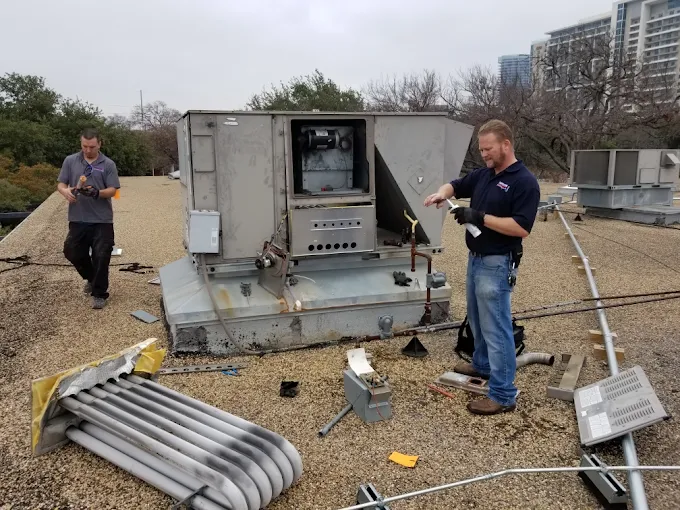
By the TemperaturePro team — serving Dallas, TX, and nearby areas like Richardson, TX.
A busy property manager in Dallas notices it in the middle of a workday: the lobby feels cooler than the rest of the building, tenants complain that their space “never really warms up,” and the maintenance request volume spikes right when facilities teams are already stretched thin. If you’re running commercial HVAC, the worst time to discover furnace problems is during peak occupancy—especially after a long gap between heating seasons.
This commercial HVAC maintenance checklist is built for busy facilities that need dependable heating, clear safety checks, and a practical plan for furnace service, furnace maintenance, and furnace inspections. You’ll also see common mistakes to avoid so you don’t waste budget on short-term fixes that miss the real issues.
Quick Answer
For commercial facilities, a solid furnace maintenance plan usually includes furnace safety inspection, furnace cleaning, furnace system checkup, and documentation of findings. If you’re seeing symptoms like furnace not heating or furnace blowing cold air, don’t just reset controls—verify airflow, thermostat operation, ignition/combustion performance (gas furnaces), and electrical connections before the issue worsens.
Key takeaway: Treat furnace service as a safety + performance routine, not a “fix it when it fails” task. That mindset reduces downtime and tenant complaints in Dallas commercial buildings.
What to Check First
Before you schedule work, do a quick, low-risk triage. This helps your HVAC contractor bring the right parts and reduces repeat visits.
- Confirm the complaint details: Is it one zone/area or the whole building? When does it happen (only mornings, only evenings, only after a certain runtime)?
- Check visible airflow issues: Are supply registers blocked by storage, temporary partitions, or dirty filters? Is the return path unobstructed?
- Look for error codes and status lights: Many furnace faults provide a clue to whether the issue is ignition, airflow, temperature rise, or control board related.
- Verify thermostat settings: Confirm schedules, occupancy settings, and that the thermostat is calling for heat as expected.
- Note recent changes: Construction dust, power interruptions, or maintenance work can create conditions that trigger furnace problems.
Pro tip: If the furnace runs but the building doesn’t warm up, start by checking airflow (filters, dampers, blocked returns) before assuming it’s a “heating” problem. In commercial systems, airflow restrictions can create symptoms that look like a furnace failure.
Main Things Customers Should Understand
Commercial furnace maintenance isn’t just about making the unit “work.” It’s about ensuring safe operation, consistent comfort, and predictable performance across the season. Below are the major areas your facilities team should expect to be addressed during maintenance.
1) Furnace Safety Inspection: the non-negotiable foundation
A proper furnace safety inspection focuses on combustion safety (for gas furnaces), proper venting/condensate management (when applicable), and control operation. This is where many facilities find issues early—before they become emergency furnace repair calls.
2) Furnace Cleaning: performance and efficiency depend on airflow + cleanliness
Dust and debris build up over time. During furnace cleaning and tune-up work, technicians typically inspect and clean components that affect heat transfer and airflow performance. If your filters are consistently overloaded or bypassed, you may see repeating symptoms that maintenance should catch.
3) Furnace Tune-Up and Maintenance Service: verify key operating measurements
During furnace tune-up and furnace maintenance service, the goal is to verify that the system is operating within expected ranges and that controls respond correctly. This is also a good time to review any trends from prior service visits.
4) Troubleshooting symptoms: separate common causes from guesses
If you’re dealing with furnace troubleshooting questions like “why isn’t it heating?” or “why is it blowing cold air?”, the answer often points to one of a few categories: airflow restriction, ignition/control faults, sensor issues, or ventilation/venting concerns. A methodical approach prevents unnecessary part swapping.
| Situation | What It Usually Means | Practical Next Step |
|---|---|---|
| Furnace not heating | Often tied to ignition/control status, thermostat call issues, or safety/airflow interlocks. | Schedule a furnace inspection and fault-code diagnostic before authorizing repairs. |
| Furnace blowing cold air | Commonly linked to airflow problems (dirty filters/blocked returns), fan operation, or control timing. | Confirm airflow path and verify operating parameters during service. |
| Frequent breakdowns | May indicate worn components, repeated safety trips, or underlying performance decline. | Compare furnace maintenance vs. system replacement options with a technician. |
Need a maintenance plan built for commercial uptime?
TemperaturePro helps Dallas-area facilities reduce downtime by aligning furnace maintenance, furnace inspections, and corrective service with how your building actually operates.
Call (469) 275-1624Why This Matters in Dallas, TX
Dallas weather swings can make heating demand feel unpredictable. Even when heating run-time isn’t constant, commercial equipment still experiences stress from seasonal changes, dust exposure, and indoor airflow patterns. In office buildings, retail spaces, and multi-tenant facilities, comfort complaints often show up first in high-traffic areas where temperature stratification and airflow limitations are more noticeable.
Local insight from the field: In Dallas and nearby Richardson, TX, we frequently see maintenance delays caused by busy facility calendars. When that happens, issues like restricted airflow or failing sensors can develop slowly—until a colder snap or a busy occupancy week pushes the system beyond what it can reliably handle.
If you also manage cooling systems, it’s worth keeping the whole HVAC picture aligned. For example, you can explore commercial HVAC services to coordinate heating and cooling maintenance so you’re not scrambling across seasons.
Common Mistakes to Avoid
These are the missteps we see most often when facilities treat furnace service like a quick fix instead of a managed maintenance routine.
- Resetting controls without diagnosing: A furnace may “restart,” but the underlying condition (airflow restriction, sensor fault, or ignition issue) can persist and trigger repeat failures.
- Skipping filter and airflow checks: Many “heating” complaints trace back to airflow. If filters are overdue or returns are obstructed, the furnace can run inefficiently—or not deliver heat.
- Waiting for a complete failure: Ignoring early signs like delayed heat, inconsistent comfort, or unusual cycling often turns a planned service visit into emergency furnace repair.
- Only addressing symptoms: Replacing parts without confirming measurements and operating conditions can lead to short-lived results.
Customer Checklist
Use this as your facilities “ready for service” checklist. It helps you coordinate access, capture symptoms, and ensure the technician can complete a thorough furnace maintenance and furnace inspection visit.
Commercial HVAC maintenance checklist (furnace-focused)
- Record symptoms: Note when issues happen, which areas are affected, and whether the unit cycles normally.
- Check filters and airflow path: Confirm filter status and that returns/supplies aren’t blocked by storage or construction debris.
- Verify thermostat schedule: Confirm schedules and that the thermostat calls for heat during occupied hours.
- Locate and document furnace details: Identify the unit(s) serving the affected zones, including any rooftop or mechanical room access notes.
- Provide recent history: Power interruptions, recent maintenance work, or any dust-generating construction activity.
- Ask for a furnace inspection report: Request findings tied to safety, cleaning needs, and maintenance recommendations.
- Plan the next step: If repairs are needed, coordinate timing to minimize downtime during occupied periods.
Important: If you see persistent error codes, repeated safety trips, or the unit running with abnormal behavior, don’t keep cycling it. Document what you see and schedule professional diagnosis.
If you’re specifically looking for structured heating maintenance, you can also review furnace maintenance options to understand what a service visit typically covers.
And if your facility’s issue is tied to a specific symptom right now, you may want to start with a service category like furnace tune-up or furnace repair depending on whether the unit is actively failing or simply performing poorly.
Ready to Get Help From TemperaturePro?
If your Dallas facility is dealing with inconsistent heat, furnace performance issues, or the risk of emergency furnace repair during a busy week, a planned furnace inspection and routine maintenance approach is the most practical path. TemperaturePro helps property managers and business owners coordinate heating service with real-world scheduling needs in Dallas and Richardson, TX.
Book a commercial furnace maintenance visit
TemperaturePro supports Dallas-area facilities with furnace inspections, furnace maintenance service, and repair when you need it—so your HVAC system stays dependable through the season.
Call (469) 275-1624Frequently Asked Questions
How do I know if we need furnace maintenance or furnace repair?
Maintenance is usually the right step if your system runs but comfort is inconsistent, heating response feels slower, or you’re approaching seasonal demand with overdue service history. Furnace repair is more likely when you’re seeing furnace not heating symptoms, frequent cycling, error codes, or a clear performance failure like furnace blowing cold air. A professional inspection helps confirm what’s actually happening, rather than guessing based on one symptom.
What should be included in a commercial furnace inspection?
A thorough furnace inspection typically includes checking safety-related operation, verifying airflow and operating conditions, and evaluating key components that affect heat delivery and control performance. For gas systems, technicians also inspect combustion-related safety considerations and venting conditions as applicable. You should expect a clear explanation of findings and recommended next steps tied to your facility’s needs.
Can we handle furnace issues in-house by resetting the thermostat or breakers?
It’s okay to reset controls if you’re troubleshooting a minor, one-time glitch—but repeated resets usually hide the real cause. If the furnace keeps failing, triggering error codes, or shows abnormal operation, continuing resets can lead to delays and higher repair costs. In a commercial facility, it’s generally smarter to document the behavior and schedule diagnosis so you can restore heating reliably with less downtime.
What are common causes of furnace blowing cold air?
Cold-air complaints often connect to airflow restrictions (dirty filters, blocked returns, closed dampers), fan operation issues, or control timing/sensor faults. Less commonly, ignition or combustion-related problems can also affect heat delivery. The fastest way to avoid guesswork is to verify airflow and check diagnostic information during a furnace service visit.
Is it worth planning furnace maintenance for multiple units in one building?
Yes, it often is—especially in commercial settings where multiple units serve different zones. Planning maintenance reduces the chance that one system fails during peak occupancy and helps you coordinate access to mechanical rooms. It also gives your team a clearer maintenance history for each unit, which helps technicians diagnose issues faster when service is needed.
About TemperaturePro
TemperaturePro helps Dallas, TX and nearby areas like Richardson, TX with HVAC heating service focused on practical outcomes: reliable furnace maintenance, thorough furnace inspections, and repair when performance or safety issues show up. The team’s approach centers on helping customers understand what’s happening, avoid unnecessary parts swapping, and choose the right next step for dependable comfort in commercial facilities.