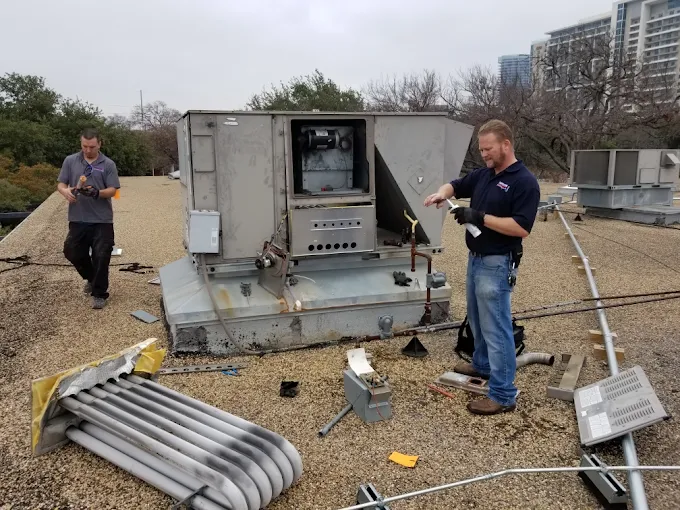
By the TemperaturePro team — serving Dallas, TX and nearby areas like Richardson, TX.
You’re halfway through an early-morning routine in Dallas, TX, and the furnace kicks on—then it either stalls, blows lukewarm air, or won’t start at all. Meanwhile, the outdoor unit is already working overtime in the heat, and you’re thinking: Is this an emergency, or can it wait? For many homeowners and business managers, the real problem isn’t only the breakdown—it’s the lack of maintenance that makes failures happen at the worst time.
This guide explains how commercial HVAC maintenance helps prevent breakdowns, improve system reliability, and reduce energy waste. You’ll also see what to check first, common mistakes to avoid, and how to plan furnace and AC furnace maintenance, furnace inspections, AC inspections, and HVAC maintenance before small issues turn into downtime.
Quick Answer
Preventing HVAC breakdowns comes down to consistent maintenance and timely inspections—especially for systems that run hard in Dallas weather. A good commercial HVAC maintenance plan typically includes routine filter and airflow checks, thermostat and control verification, electrical/burner or refrigerant checks, safety inspections, and planned tune-ups ahead of peak heating/cooling seasons.
Key takeaway: Most breakdowns aren’t random—they follow patterns like neglected furnace service, failing components, restricted airflow, or refrigerant issues that start small and get expensive.
What to Check First
If you’re dealing with inconsistent heating or cooling, start with the simplest checks before you schedule service. These steps help you describe the problem clearly to a technician and may prevent unnecessary part replacements.
- Thermostat behavior: Confirm the thermostat is calling for heat/cooling and that the setpoint makes sense.
- Airflow problems: For furnaces, note whether air is weak, noisy, or “blowing cold air.” For AC, check whether airflow feels warm when it should be cool.
- System status lights / error codes: Many HVAC systems display fault codes that point to the real cause.
- Recent changes: Did filters get replaced, did someone change thermostat settings, or did power fluctuate?
- Filter condition: A clogged filter can cause heating/cooling inefficiency and shorten equipment life.
If the system isn’t operating safely or you suspect a major issue (like repeated shutdowns, strong odors, or persistent “no heat”), it’s time to call for professional HVAC repair and maintenance support.
Pro tip: If you’ve been searching “furnace repair near me” because the unit won’t heat consistently, write down what happens: Does it start then stop? Does it run but blow warm/cold air? Those details help technicians narrow down whether you need furnace troubleshooting vs. a full furnace maintenance service visit.
Main Things Customers Should Understand
Commercial systems in Dallas typically see heavy-duty cycles—long operating hours, frequent occupancy changes, and constant demand. That’s why maintenance is more than “cleaning.” It’s a structured approach to reliability, safety, and efficiency.
1) Prevent breakdowns with a maintenance rhythm
When maintenance is planned, technicians can inspect components before they fail under load. For example, furnace issues often reveal themselves through minor symptoms—slow ignition, inconsistent heat output, or unusual noises—before you ever get a complete shutdown.
2) Tune-ups aren’t just for furnaces—AC inspections matter too
On the cooling side, AC inspections and AC tune-ups help detect refrigerant-related problems, airflow restrictions, and system control issues. Refrigerant leaks can be especially costly if they’re ignored because the system works harder to compensate.
3) Safety inspections protect people and property
For gas furnace systems, safety checks are part of responsible service. A professional furnace safety inspection can help confirm normal operation, verify key combustion and ventilation indicators, and reduce risk from overlooked safety issues.
Local insight: In Dallas and Richardson, TX, systems often swing between heavy cooling demand and cold snaps. That seasonal transition is a common time for failures—components that were “fine enough” during summer may show problems when heating season begins.
Repair vs. Replace: how to decide without guessing
It’s normal to wonder whether you should repair or plan a furnace replacement / HVAC replacement. The best decision usually depends on equipment condition, parts availability, and how often repairs are needed.
| Option | When it’s usually the better move | What to expect |
|---|---|---|
| Furnace repair | Single component failure, limited damage, and the system can still operate reliably after the repair. | Targeted troubleshooting and correction, then performance checks as part of furnace service. |
| Furnace tune-up / maintenance | Symptoms are minor, performance is inconsistent, or you’re preventing future failures. | Cleaning/inspection steps and safety checks aimed at restoring efficient operation. |
| Furnace system replacement | Frequent breakdowns, multiple failing components, or the system is no longer efficient/reliable enough for your needs. | A system-focused plan for new furnace installation options and long-term operation. |
If you’re trying to decide what you need next, you can explore TemperaturePro’s service routes for more context:
- Commercial HVAC maintenance and repair options for business properties
- Furnace maintenance service that focuses on reliability and safe operation
- AC repair when cooling performance drops or the system won’t cool properly
- Furnace tune-up for improving performance before the season gets busy
Want to reduce downtime for your building?
TemperaturePro helps Dallas, TX businesses and homeowners build a maintenance plan that targets common failure points—so you’re not stuck waiting for repairs at peak demand.
Call (469) 275-1624Why This Matters in Dallas, TX
Dallas weather puts real strain on HVAC equipment. Long cooling stretches, humidity, and frequent day-to-night temperature swings mean systems can run continuously. Then, when heating season arrives, components that were marginal during summer may fail sooner.
Here’s what we commonly see in the Dallas market:
- Airflow issues from clogged filters or restricted ductwork can make both heat and cooling less efficient—leading to higher energy use and more wear.
- Control and safety interruptions can show up as intermittent operation, especially when systems transition between seasons.
- Maintenance gaps often lead to “repair-first” cycles—replacing parts reactively instead of inspecting and correcting the root cause early.
For commercial customers, reliability matters beyond comfort—comfort affects employee productivity, customer experience, and equipment longevity. Preventative HVAC maintenance helps you maintain steady operating conditions and avoid unexpected service calls.
| Maintenance focus | What it helps prevent | How it impacts energy |
|---|---|---|
| Furnace inspections and furnace cleaning | Inconsistent heating, burner/combustion issues, and safety-related shutdowns | Improves safe, efficient operation so the system doesn’t overwork |
| AC inspections and AC system checkups | Reduced cooling performance, airflow problems, and refrigerant leak-related strain | Supports efficient cooling so the unit cycles normally |
| Annual HVAC maintenance planning | Compounding issues that lead to repeated breakdowns | Helps maintain stable performance throughout the year |
Common Mistakes to Avoid
Even careful property managers and homeowners can fall into patterns that make HVAC problems worse. Here are the most common mistakes we see with furnace repair, AC service, and overall HVAC maintenance planning:
- Waiting for a complete failure: If you only call when the system stops, you lose the chance to catch early symptoms (like weak airflow or intermittent heat).
- Ignoring airflow and filter issues: A clogged filter or poor airflow can cause the system to run longer and harder—leading to unnecessary wear.
- Assuming “it’s fine” during mild seasons: Dallas swings can reveal hidden problems when demand changes between heating and cooling.
- Skipping furnace safety inspections: For gas furnace systems, safety checks are not optional if you want reliable, responsible operation.
Customer Checklist
Use this checklist to prepare for a maintenance visit or to document what’s happening before you schedule furnace service or AC inspections.
- Thermostat settings: Confirm the thermostat mode (heat/cool) and setpoint match your goal.
- Observed symptoms: Note “furnace not heating,” “blowing cold air,” “AC not cooling,” unusual sounds, or cycling issues.
- Airflow check: Record whether airflow seems weak, uneven, or unusually warm/cold.
- Recent maintenance: When was the last furnace tune-up, AC tune-up, or furnace maintenance service?
- Any error codes/indicators: Write down the exact code or what the lights are displaying.
- System history: If you’ve had prior repairs (furnace repair, emergency furnace repair, AC repair), list what was replaced.
Important: If you notice repeated shutdowns, gas odor, or frequent tripping of safety controls, don’t keep resetting the system. Turn the unit off and contact TemperaturePro for professional help.
Frequently Asked Questions
How do I know if I need furnace maintenance or emergency furnace repair?
If your system is running but not performing consistently—like weak heat, delayed ignition, or uneven temperatures—maintenance and troubleshooting may be the right next step. If the furnace won’t start, repeatedly shuts down, or you’re dealing with clear safety concerns, that’s when you should treat it as urgent and contact a professional for emergency furnace repair guidance. For Dallas, TX homes and businesses, the key is timing: early symptoms often indicate a fixable issue before it becomes a full outage.
What should a commercial HVAC maintenance visit include?
While each system differs, a solid commercial HVAC maintenance visit typically includes inspection of key operating components, checks for airflow and system performance, verification of control operation, and safety-related evaluation where applicable. The goal is preventative HVAC maintenance—finding issues early so your building doesn’t experience unexpected downtime. TemperaturePro’s approach is designed to help you understand what’s happening now and what may need attention next.
Can I troubleshoot furnace problems myself?
You can do basic checks like confirming thermostat settings, observing airflow, and noting error codes. Beyond that, furnace troubleshooting can involve electrical and safety-sensitive systems. If you’re dealing with gas furnace operation, safety inspections and repairs should be handled by trained technicians. If you’re unsure whether your issue is “furnace troubleshooting” vs. a service or safety concern, it’s better to call before you guess.
What’s the difference between a furnace tune-up and furnace inspections?
A furnace tune-up generally focuses on improving performance—cleaning, adjusting, and verifying operation so the system runs efficiently. Furnace inspections are broader and can include safety evaluation and a thorough review of system components. In practice, many service visits include elements of both, but the emphasis differs. A tune-up is often seasonal; an inspection can be triggered by symptoms, prior repairs, or maintenance planning.
How does regular maintenance help reduce energy waste?
When heating and cooling systems operate with clean components and correct settings, they typically cycle more normally and avoid unnecessary strain. Restricted airflow, failing parts, or minor control problems can force the system to run longer to achieve the same comfort. Regular furnace maintenance and AC inspections help catch these issues before they significantly reduce efficiency, which can mean lower energy use and fewer breakdowns.
Ready to Get Help From TemperaturePro?
If your equipment is acting up—whether it’s a furnace that won’t heat properly, an AC that can’t keep up, or a system that’s cycling in ways that don’t feel right—TemperaturePro can help you choose the right next step. We serve Dallas, TX and nearby areas like Richardson, TX with practical HVAC heating services designed around reliability and long-term performance.
Schedule HVAC maintenance support today
TemperaturePro helps customers across Dallas, TX reduce HVAC breakdown risk through thoughtful furnace inspections, AC inspections, tune-ups, and preventative HVAC maintenance.
Call (469) 275-1624About TemperaturePro
TemperaturePro helps Dallas, TX and nearby customers with HVAC maintenance, heating repair, furnace service, AC inspections, and commercial HVAC support. The focus is practical, customer-friendly guidance—helping you understand what’s causing performance issues, what maintenance can prevent, and what option makes sense for your property and operating needs.
Example scenario: preventing a repeat breakdown
A property manager in Richardson, TX noticed the heating system sometimes struggled to reach the lobby’s comfort level on colder mornings. Instead of only addressing the symptom, the team scheduled furnace inspections and service. During the visit, the technician identified issues tied to airflow and component performance that were causing inconsistent heating. After completing the recommended furnace maintenance steps, the system returned to steadier operation—reducing the chance of another “no heat” call during a busy workday.